
Timeline of Systematic Data and the Development of Computable Knowledge


 1850: Transmitting information on stock prices
Paul Julius Reuter uses pigeons to fly stock prices between Aachen and Brussels.
1850: Transmitting information on stock prices
Paul Julius Reuter uses pigeons to fly stock prices between Aachen and Brussels.
 1850: Florence Nightingale
Visualizing statistical data
Florence Nightingale pioneers the graphical representation of statistics and invents the polar area diagram, also known as the Nightingale rose diagram.
1850: Florence Nightingale
Visualizing statistical data
Florence Nightingale pioneers the graphical representation of statistics and invents the polar area diagram, also known as the Nightingale rose diagram.


 1879: Gottlob Frege
Axiomatizing knowledge through logic
Frege created a formal system and language in which mathematical and other knowledge could be represented in terms of an extended form of logic.
1879: Gottlob Frege
Axiomatizing knowledge through logic
Frege created a formal system and language in which mathematical and other knowledge could be represented in terms of an extended form of logic.
 1879: Index Medicus
Indexing all medical literature
John Shaw Billings publishes Index Medicus, a comprehensive index of medical scientific journal articles.
1879: Index Medicus
Indexing all medical literature
John Shaw Billings publishes Index Medicus, a comprehensive index of medical scientific journal articles.


1800

1801: Controlling a machine with data
Joseph Marie Jacquard creates the Jacquard loom, which weaves patterns specified by punched cards.

1802: Color theory
Systematizing color
Thomas Young formalizes the idea of three components to color.

1817: Organization of the chemical universe
Leopold Gmelin publishes his handbook of organic chemicals.
1825

1830: Difference engine
Printing mathematical tables by machine
Charles Babbage constructs a machanical computer to automate the creation of mathematical knowledge.

1837: General Register Office
Recording every life
Births and deaths begin to be systematically recorded by the UK government.

1837: Birth of photography
Capturing images automatically
Louis Daguerre creates the daguerreotype method of photography.


1842: Ada Lovelace
First computer programmer
Ada Lovelace publishes the world's first algorithm for machine computing.

1844: Samuel Morse
Transmitting information by wire
Samuel Morse sends the first public telegraph message.


1849: Who's Who
The first edition of Who's Who, which compiled biographical information on royals, members of Parliament, and others, is published.
1850

1850: Transmitting information on stock prices
Paul Julius Reuter uses pigeons to fly stock prices between Aachen and Brussels.
.jpg)
1850: Florence Nightingale
Visualizing statistical data
Florence Nightingale pioneers the graphical representation of statistics and invents the polar area diagram, also known as the Nightingale rose diagram.

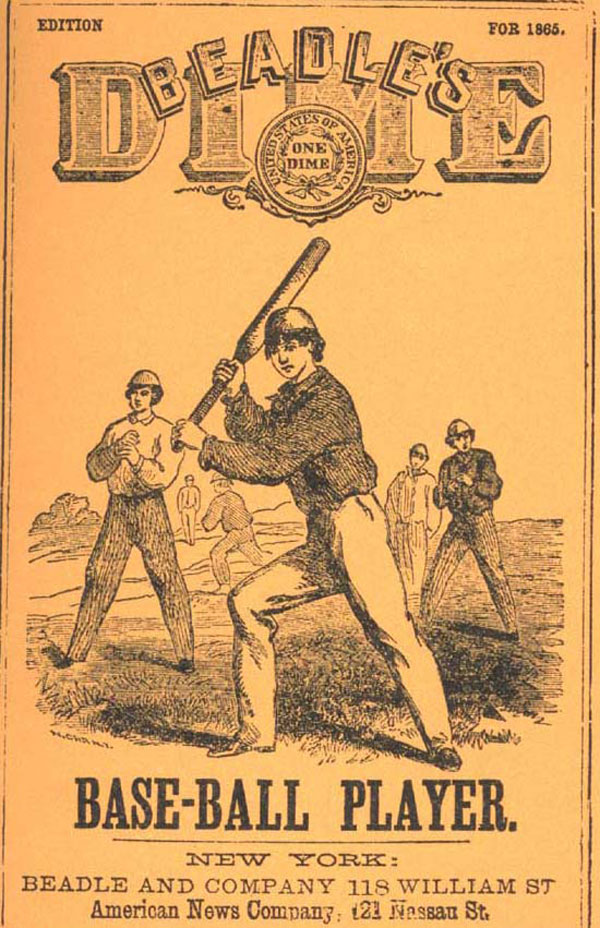
1860s: Henry Chadwick
Keeping records of sports
Henry Chadwick begins to keep systematic records of player achievements in baseball.

1860: Charting and forecasting the weather
Robert FitzRoy uses a network of telegraph stations to assemble systematic charts and make forecasts of British weather.


1867: Stock Ticker
The market on a tickertape
Edward Calahan invents a telegraph-like system to transmit every price change from the floor of the New York Stock Exchange.


1873: Shepard's Citations
Frank Shepard's Shepard's Citations is introduced to organize references to legal cases.
1875

1876: The Dewey Decimal System
Classifying the world's knowledge
Melvil Dewey invented the Dewey Decimal System for classifying the world's knowledge and specifying how to organize books in libraries.

1877: Invention of the phonograph
Recording the sound of anything
Thomas Edison invents the phonograph.

1878: US Public Health Service
Recording disease
By an act of US Congress, collection of data on notifiable diseases by the Public Health Services begins.

1878: Phone Directory
The first phone directory is issued, listing 50 subscribers in New Haven, Connecticut.

1879: Gottlob Frege
Axiomatizing knowledge through logic
Frege created a formal system and language in which mathematical and other knowledge could be represented in terms of an extended form of logic.
1879: Index Medicus
Indexing all medical literature
John Shaw Billings publishes Index Medicus, a comprehensive index of medical scientific journal articles.

1880s: Oxford English Dictionary
Collecting every word in English
With extensive information supplied by a network of volunteers, the OED is a systematic project to get complete knowledge of all the words in the English language.

1881: The Harvard Computers
Processing astronomical data
A group of women who processed astronomical data by measuring the brightness, positions and colors of stars develops the Harvard classification scheme for stellar classification.

1882: United States Geological Survey
Mapping the rocks of America
The US Geological Survey is authorized by Congress to create a geological map of the entire US.

1886: First printed "Yellow Pages"
A directory of every business
Reuben H. Donnelly prints the first "Yellow Pages" business directory.

1888: International Phonetic Alphabet
Systematization of sounds across languages allowed for extensive linguistic study on various qualities of speech, including phones, phonemes, intonation and separation of words and syllables.

1889: Giuseppe Peano
Formalizing the rules of arithmetic
Peano publishes axioms to give a complete formalization of arithmetic.

1890: Herman Hollerith
Automating the census with punched cards
Hollerith puts all the data from the US Census onto punched cards, which can then be tabulated automatically. The company he started is an ancestor of IBM.

1898: Fred Jane
Making military information available
Fred Jane collecting worldwide data and publishes Jane's All the World's Fighting Ships.

1898: Thomas Register of American Manufactures
Harvey Mark Thomas begins publication of the Thomas Register of American Manufactures.
We're continuing to update this timeline... Do you know some history we don't?
 We want your input »